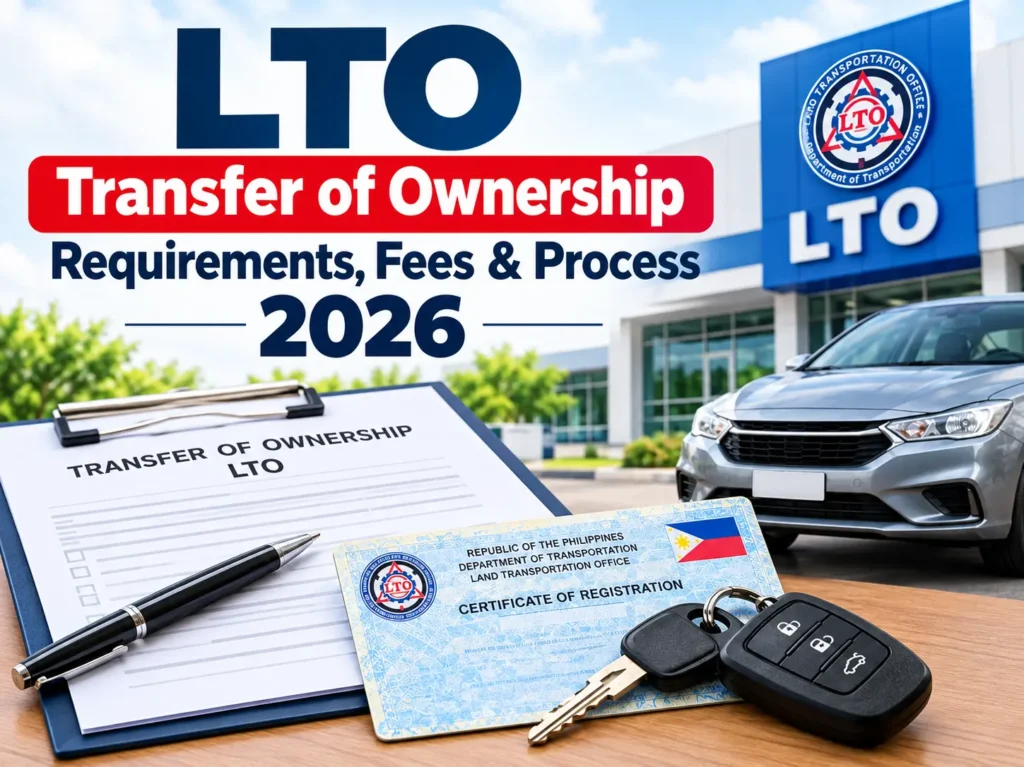
LTO Transfer of Ownership – Requirements, Fees & Process 2026
If you buy a used vehicle, it can leave the new owner with paperwork that still needs to be completed. The car or motorcycle may already be in their possession, but the LTO records can still show the previous owner’s name. Missing documents, pending clearance, or vehicle inspection can further delay the ownership update and create issues with later LTO transactions. LTO Transfer of Ownership is the official process for changing the registered owner of a vehicle through the Land Transportation Office.
The transfer requires the Deed of Sale, OR and CR, valid IDs, CTPL insurance, PNP-HPG clearance, vehicle inspection, and applicable fees. We will take you through the LTO Transfer of Ownership process and explain what is needed at each stage. The sections below also cover the required documents, application steps, costs, and special cases.
LTO Transfer of Ownership: Required Documents
The ownership transfer requires several documents from the buyer and seller. You can prevent delays during the LTO transaction by having the correct paperwork ready. Here are the main documents you need to prepare for the transfer:
-
Original OR and CR: The original OR and CR contain the vehicle’s registration and ownership details. These are submitted to verify the vehicle’s current records. -
Notarized Closed Deed of Sale: Serves as official legal proof of transfer. It must be a closed Deed of Sale with buyer and seller names filled in, as LTO strictly rejects open deeds. -
Valid IDs: Valid government-issued IDs from the buyer and seller are needed for identity verification. Copies may also be required with the application. -
CTPL Insurance: A valid CTPL insurance policy is required for the transfer. Its details should be properly recorded for the LTO transaction. -
PNP-HPG Clearance: The PNP-HPG clearance checks the vehicle’s records before the ownership change. It also helps confirm that the vehicle has passed the required clearance process.
How to Transfer Ownership at LTO: Step-by-Step Process
Once the required documents are ready, the transfer process begins at LTO. It includes document verification, vehicle inspection, fee payment, and final approval. These steps help update the vehicle records under the new owner’s name.
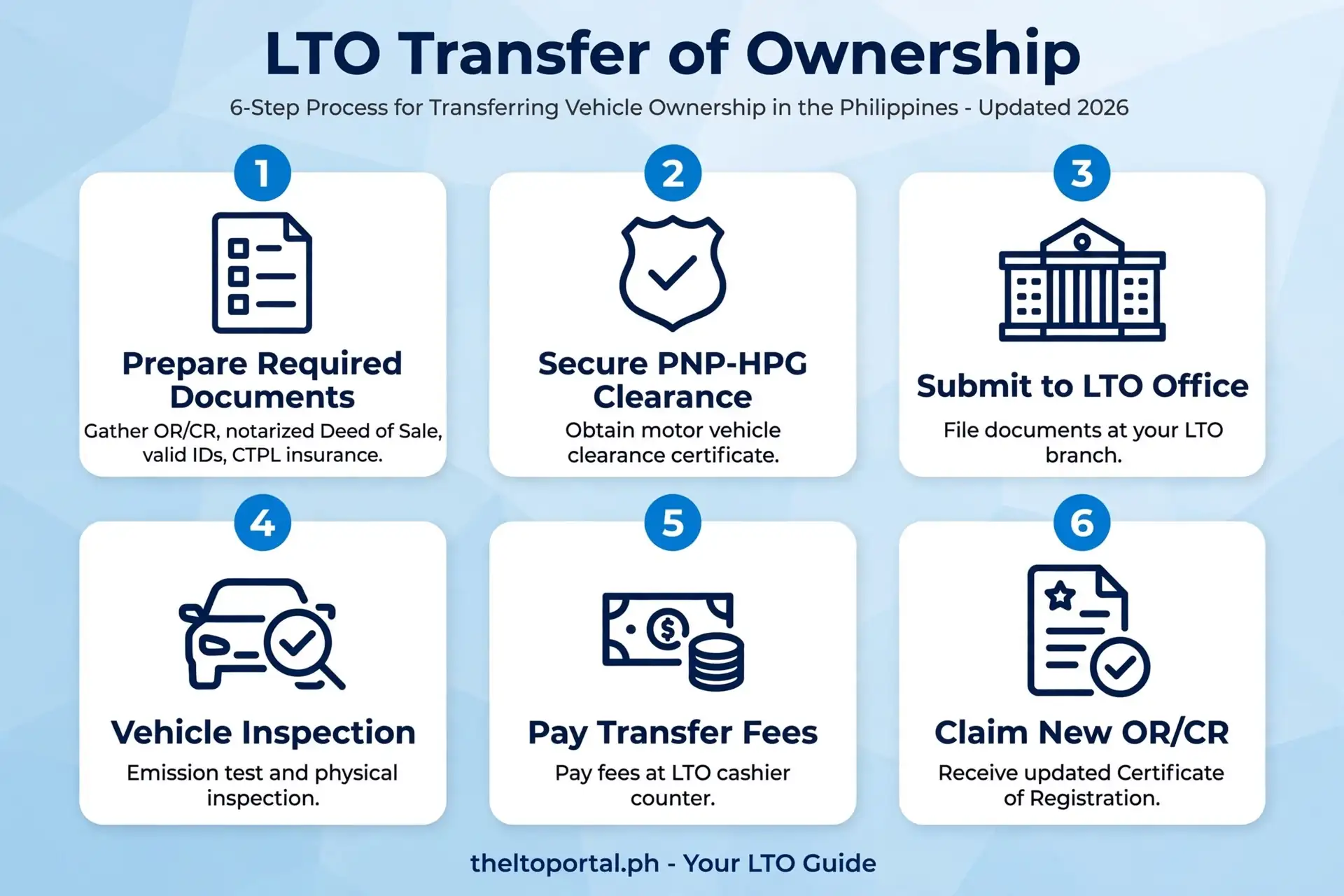
Prepare Deed of Sale: First, the buyer and seller need a properly completed and notarized Deed of Sale. The details should match the vehicle information shown on the OR and CR.
Secure HPG Clearance: After the deed is prepared, the vehicle needs PNP-HPG clearance before the transfer can proceed. This checks the vehicle records as part of the ownership change.
Submit LTO Application: With the required documents and HPG clearance ready, the transfer application can be submitted to LTO. The office checks the papers and vehicle records before moving to the next stage. After submitting the application, you can check your LTO transaction status to see if there are any updates.
Complete Vehicle Inspection: Next, the vehicle goes through the required inspection, with the inspection report included in the transaction. Once this requirement is completed, the application can move forward to payment.
Pay Transfer Fees: After the documents and inspection are accepted, the applicable LTO transfer fees are paid. Other charges may also apply depending on the vehicle and type of transaction.
Receive Updated CR: Finally, LTO processes the ownership update and issues the updated Certificate of Registration. The new CR shows the buyer as the registered owner of the vehicle.
LTO Transfer of Ownership Fees and Costs
The LTO transfer of ownership fee is only one part of the total cost. Other expenses may include late application charges, PNP-HPG clearance, notarization, CTPL insurance, and other applicable transaction costs. The table below shows the main fees and other charges that may apply:
| Expense Item | Cost PHP | Notes & Details |
| LTO Transfer Fee | ₱50.00–₱225.00 | Base ownership change fee |
| LTO Computer/IT Fee | Discontinued | Ended under LTO memoranda MVL-2026-207/208 (Sept 2026) |
| PNP-HPG Clearance Fee | ₱300.00 | Includes inspection and clearance |
| Late Transfer Fee | ₱150.00 | May apply to late transfer applications |
| Deed of Sale Notarization | ₱300.00–₱500.00 | Varies by notary public |
| CTPL Insurance & Emission | ₱1,000.00–₱1,500.00 | Required if registration is due |
Special Cases in LTO Transfer of Ownership
Some ownership transfers need extra documents or steps beyond the usual process. These cases can depend on the vehicle’s financing, the timing of the transfer, or who is handling the application.
Bank-Financed Vehicle
A bank-financed vehicle may still have an active mortgage or loan record when the owner wants to transfer it. In such cases, the financing company may need to provide the proper documents before the transfer can move forward.
Late Ownership Transfer
The new owner should process the transfer within 20 working days from the sale or actual turnover of the vehicle. If the transfer is delayed, extra fees may apply, and LTO may take further action depending on the case.
Authorized Representative
Sometimes, the buyer or seller cannot visit the LTO office personally to complete the transfer. An authorized representative can handle the transaction, but a Special Power of Attorney and other required documents may be needed.
Final Words
The LTO Transfer of Ownership is an important step after buying or selling a vehicle. You should prepare the required documents, complete the inspection and HPG clearance, and pay the applicable fees to move the process forward. If the vehicle is financed, the transfer is late, or a representative is handling it, extra requirements may apply. Once everything is completed, the updated CR confirms the vehicle under the new owner’s name.
Frequently Asked Questions
Official LTO websites:
https://lto.gov.ph/
https://portal.lto.gov.ph/
Disclaimer
TheLTOPortal is an independent informational website and is not affiliated with or endorsed by the Land Transportation Office (LTO), the LTMS Portal, or any Philippine government agency. All content is provided for general informational purposes only and should not be considered official government advice.