LTO Exam Reviewer 2026: Questions, Topics & LTMS Portal
LTO Exam Reviewer — Practice Test
This is an independent practice tool to help you review. It is not the official LTO examination and does not guarantee any result.
Select License Type
Choose the license category you want to practice.
Motorcycle License Practice Test – 1
Motorcycle License Practice Test – 2
Motorcycle License Practice Test – 3
Light Vehicle License Practice Test – 1
Light Vehicle License Practice Test – 2
Light Vehicle License Practice Test – 3
Some questions in the LTO exam may look easy, but a small detail can change the answer. Old or unclear reviewer questions can also make it harder to know what deserves your attention. An LTO exam reviewer brings important topics and practice questions into one place.
It can cover road signs, traffic laws, road markings, right-of-way, and safe driving. An LTO exam Tagalog can also make unfamiliar traffic terms easier to understand. We will guide the main topics, practice methods, and LTMS resources, so you have a clearer idea of what to study.
What Is an LTO Exam Reviewer?
An LTO exam reviewer is a study resource designed around topics related to the Land Transportation Office driver’s license examination. It can contain practice questions, road signs, traffic rules, safety topics, and common driving situations. Some reviewers are available in English and Tagalog, making them useful for different learners. In my view, the best reviewer works as a study aid rather than a source of copied online exam answers.
LTO Exam Format and Passing Score
The exam format can vary based on the type of application and license involved. Because of this, the number of questions and passing score are worth checking before relying on an older LTO exam reviewer from 2023.
| License / Test Type | Total Questions | Passing Score | Passing Rate |
|---|---|---|---|
| Student Permit – TDC | 40 Questions | 30 correct answers | 75% |
| Non-Professional License | 40 Questions | 30 correct answers | 75% |
| Professional License | 60 Questions | 45 correct answers | 75% |
| CDE Validation – Renewal | 25 Questions | 20 correct answers | 80% |
Main Topics to Cover in Your LTO Exam Review
An LTO reviewer keeps the main study topics in one place, making it easier to see what needs attention. The review can cover driving basics, road courtesy, traffic laws, driver duties, and fines.
- Road Signs and Markings: Road signs and markings become easier when their purpose is understood. Review warning, regulatory, and directional signs, along with common road markings.
- Traffic Rules and Road Situations: Review right-of-way, intersections, speed limits, parking, and lane use. A Carwahe LTO reviewer can add practice, while understanding the rules helps with different road situations.
- Safe and Defensive Driving: Focus on safe distance, careful overtaking, pedestrians, and nearby vehicles. Defensive driving also helps when traffic changes suddenly or another driver makes an unexpected move.
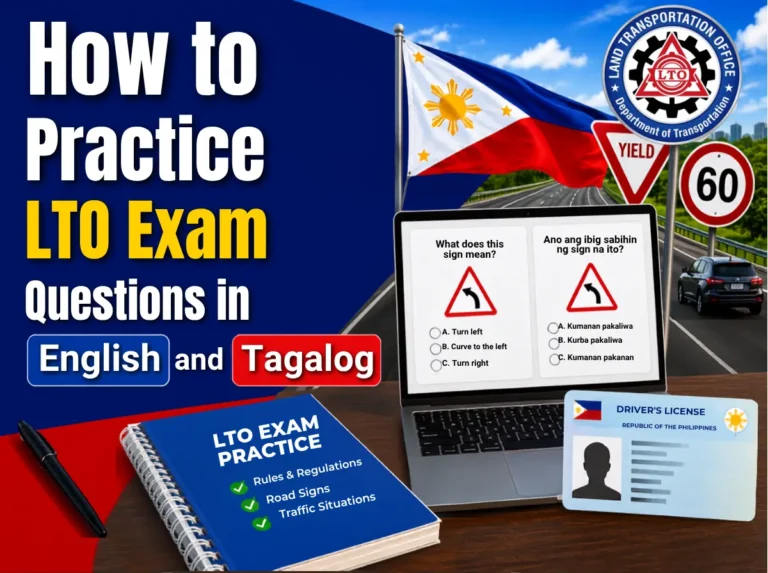
How to Practice LTO Exam Questions in English and Tagalog
Once the main topics are clear, practice questions can make the review easier. An LTO online exam reviewer or Tagalog version can help you to get familiar with common question styles.
- You can read each question carefully and look at what the situation is asking.
- Use both English and Tagalog versions when a traffic term is not clear.
- You can go back to the questions answered incorrectly and check the rule behind them.
- Try different question sets instead of relying on one LTO reviewer.
- Keep official LTO materials nearby when a reviewer gives an unclear answer.
Non-Pro, Pro, and CDE LTO Reviewe
Different license types have different study needs, so one reviewer may not cover every topic. The CDE requirement also has its own online validation exam, so the study material can vary. Here’s a quick look at what each reviewer covers.
- Non-Pro: Covers basic road rules, signs, safe driving, and common traffic situations. If you are preparing for your first driving permit, review the LTO student permit requirements before starting your application.
- Pro: Includes these basic topics along with professional driving duties and related vehicle categories.
- CDE: The online validation exam has 25 questions, with 20 correct answers needed to reach the 80% passing score. If you are taking the exam as part of a renewal, you can also review our LTO Portal Renewal guide for the next steps.
- Carwahe: Terms such as carwahe exam, carwahe LTO exam, and carwahe LTO exam reviewer generally refer to practice material, not the official LTO exam itself.
How to Use the LTMS Portal for LTO Exam Preparation?
The LTMS Portal keeps official LTO study resources in one place, including the driver’s manual and eLearning topics. It also works well with an LTO portal reviewer when a question needs more clarity.
- Log in to the LTMS Portal: You can open your account and look through the eLearning section before starting the review.
- Review the lessons: Spend some time on driving basics, road courtesy, traffic laws, and penalties.
- Check the driver’s manual: Use the manual when a reviewer’s answer seems unclear or needs more explanation.
- Review CDE topics: Go through the related lessons before taking the online validation exam, especially when it is part of the requirement.
Final Words
The LTO reviewer will prove to be an excellent resource to begin your preparation for the driver’s license exam. You can review road signs, traffic regulations, safe driving techniques, and different road scenarios, followed by practice tests. The LTMS Portal can also be used for official learning materials and CDE preparation. With steady review and a clear understanding of the rules, the exam can feel less difficult.
FAQs
Official LTO websites:
https://lto.gov.ph/
https://portal.lto.gov.ph/
Disclaimer
TheLTOPortal is an independent informational website and is not affiliated with or endorsed by the Land Transportation Office (LTO), the LTMS Portal, or any Philippine government agency. All content is provided for general informational purposes only and should not be considered official government advice.